What is God?

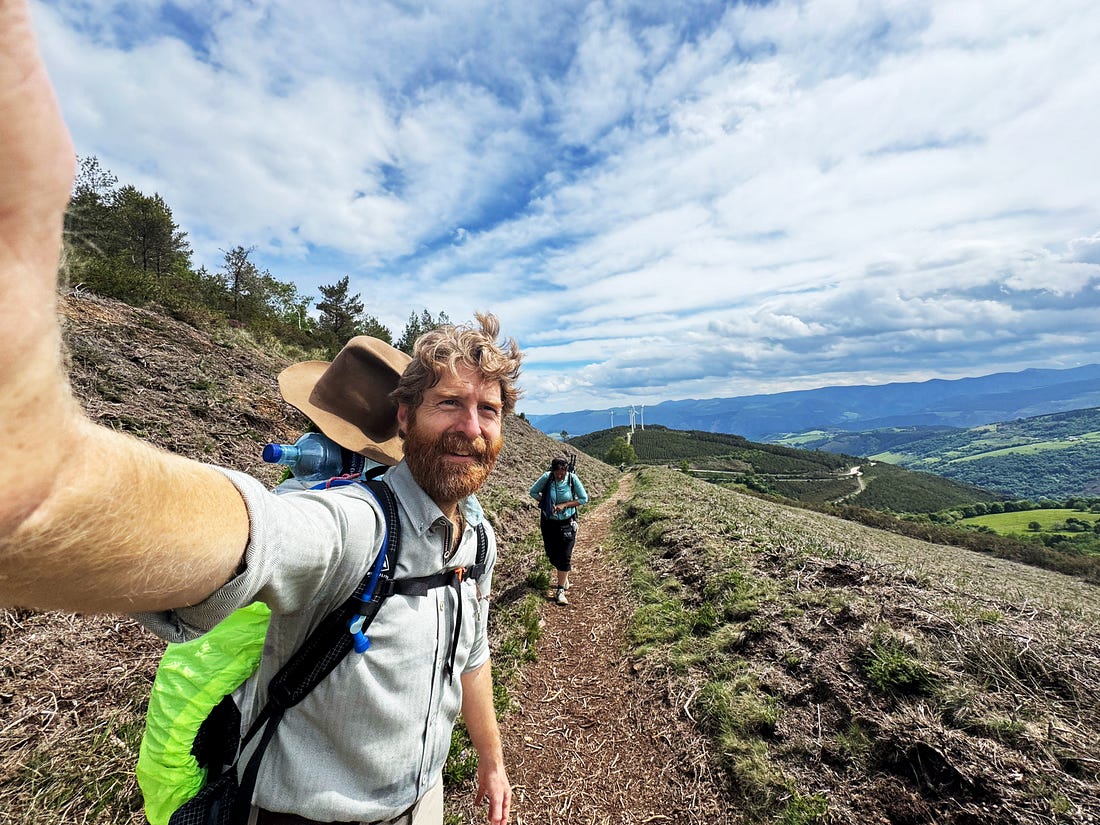
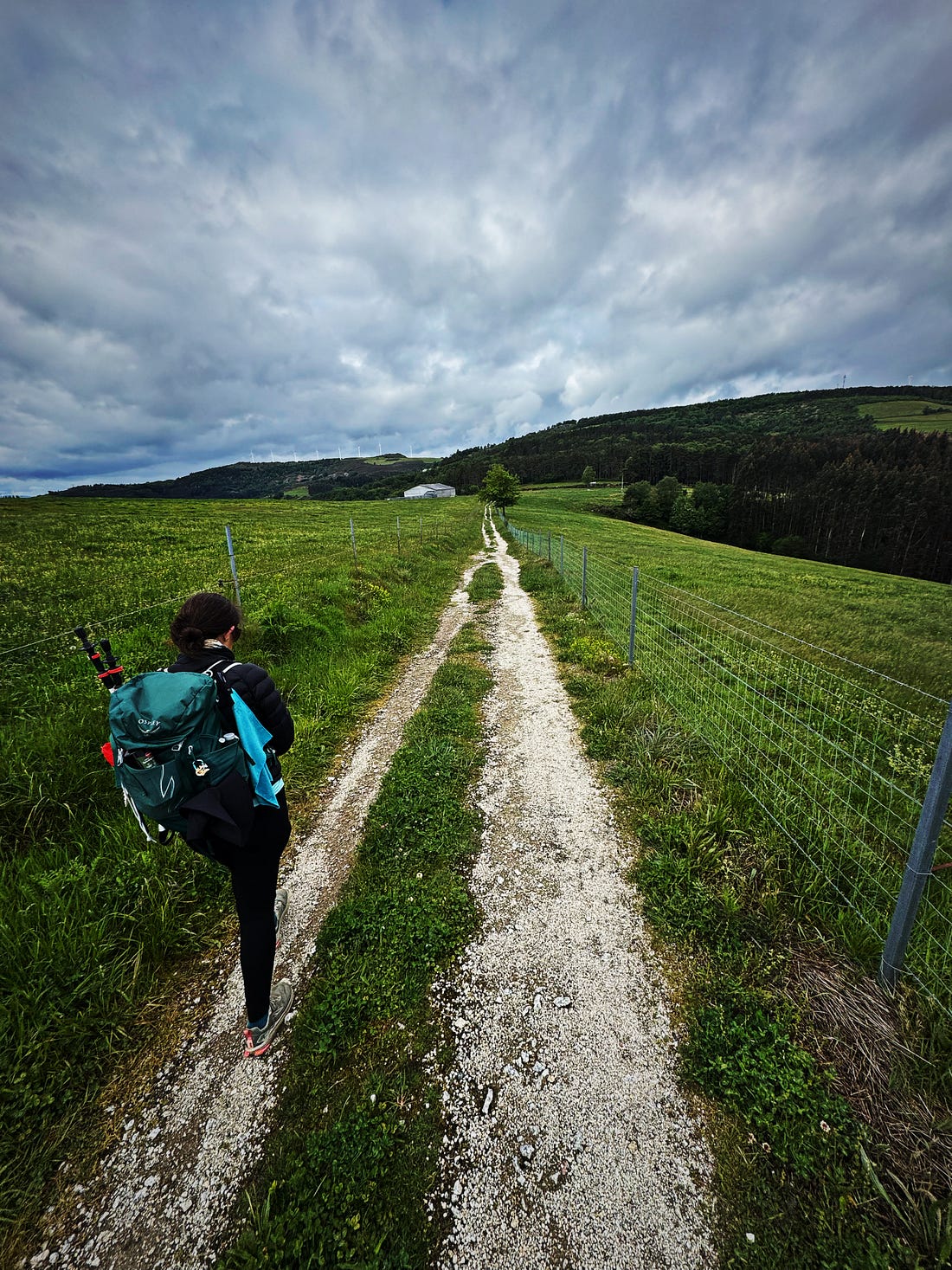
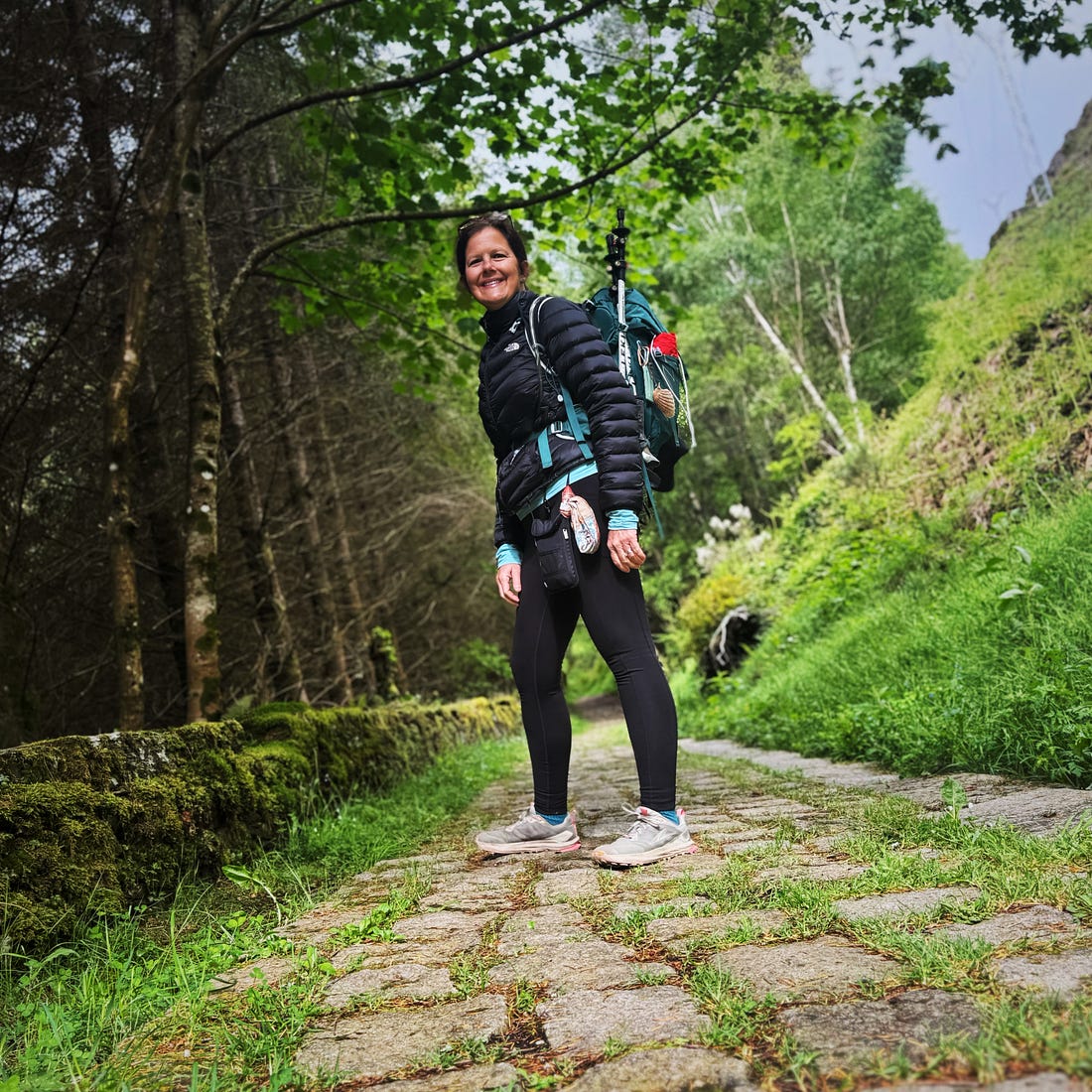
Sean Dietrich and his wife are on their second pilgrimage walking the Camino de Santiago, and he's keeping his readers informed, posting about it every day.
If I read him correctly, it only takes one such walk to capture the soul, to make the pilgrim obsessed with it. Sean makes it a compelling spiritual journey. As nonagenarians (she will become a member of the club exactly two months from today, knock knock, God willing, wishing you long years), Linda and I don't want to walk it, but we might if we were twenty years younger. I'd like to be out where the night sky is free enough of ambient light for me to contemplate Earth's view of our Milky Way Galaxy, which is the starting point for where I myself grasp the Creating God who told Moses, "I AM that I AM, I WILL BE whatever I WILL BE." In other words, "don't mess."
But anyway, heck, if we were half a century younger we might make an avocation of it. In fact, Sean wrote that he's met a pilgrim who just up and moved there to make it their life.
It's a meditation, a contemplation of creation, life, and the gracious gift of our Being here on Earth, all of us and each one of us.
For Sean it's a Time to ponder the unanswerable, same as my seminary theology professor: Who or What is God? The answers vary, because we, individuals and religious communities, like to image God ourselves.
One of our creeds may get close to right though: the "Quicunque Vult" (and whosoever would), commonly called "The Creed of Saint Athanasias" has a singular expression, "The Father incomprehensible, the Son incomprehensible, and the Holy Spirit incomprehensible; and yet they are not three incomprehensibles but one incomprehensible." You can read it in our Book of Common Prayer 1979 among Historical Documents, on page 864. Even that creed doesn't really get it, though, because it describes God as a trinitarian being, which is a human dogmatic construct expressing one humans group's apprehension of God based on scripture, tradition, reason, and experience - -
and it's what Steve Jobs called the result of other people's thinking.
As a theologian, Sean may come near when he concludes that God "is not subject to my definition."
RSF&PTL
T90
pic above Milky Way from Grand Canyon
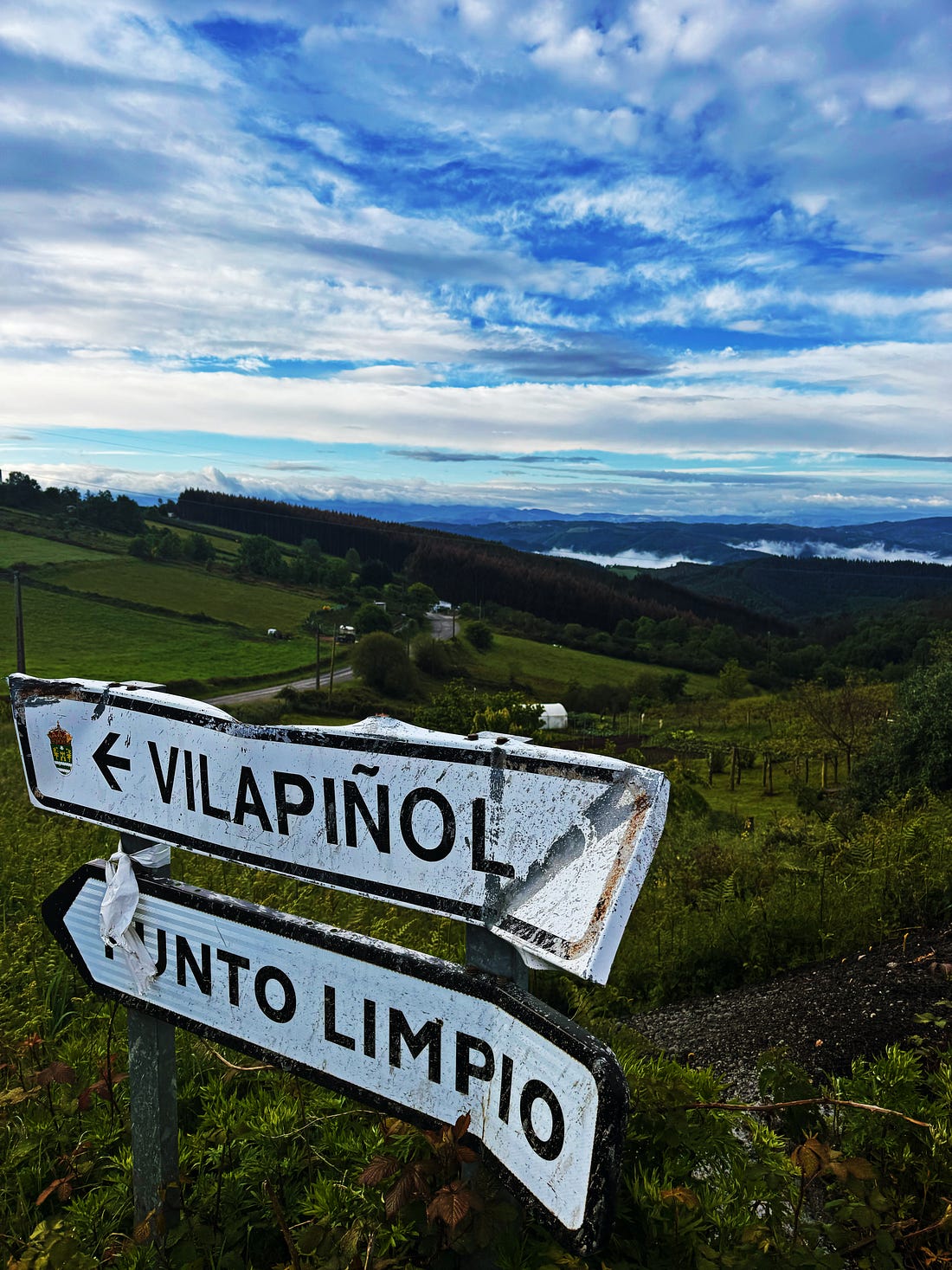
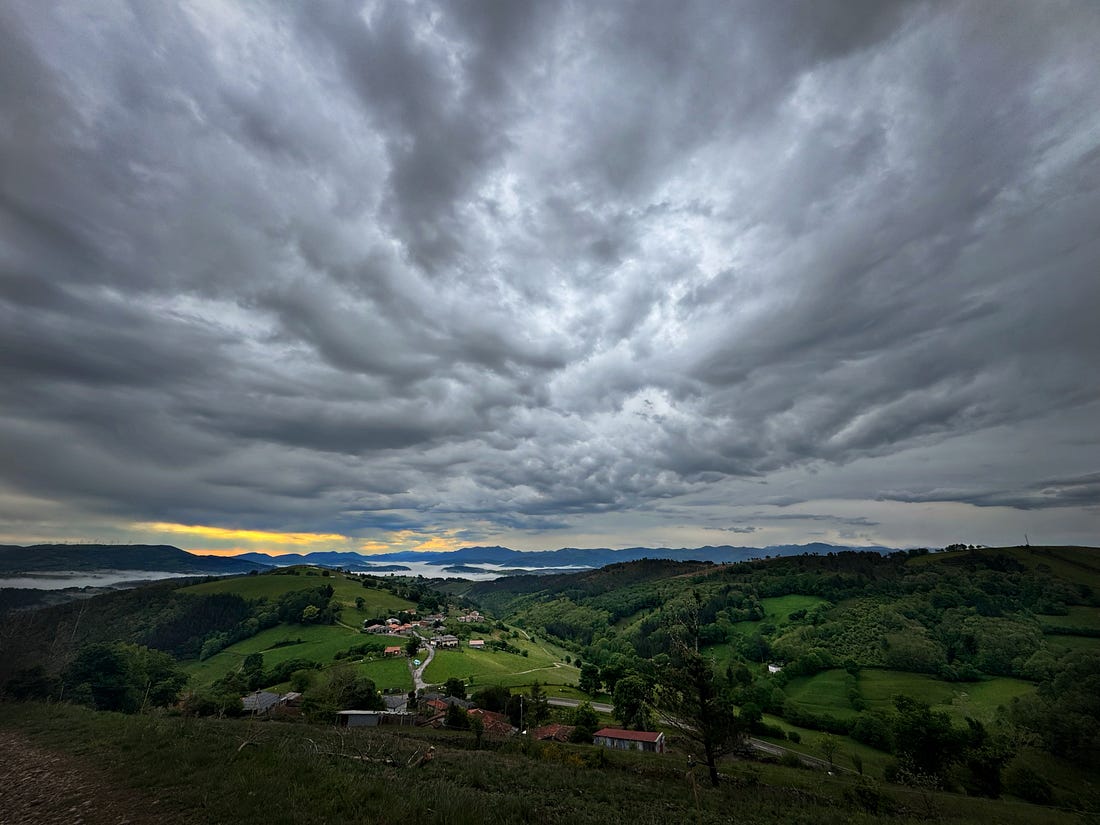
What is God? This single question underpins all things on the Camino de Santiago, a trail inhabited by us full-time pilgrims whose lives are contained in backpacks. We pilgrims think about this question as we walk. We ponder this question even as we are sleeping. Many pilgrims report having vivid dreams while on the Camino. Sometimes we aren’t even sure what we’re asking when we ask this question. But we all ask it at some point nonetheless. This morning we awoke in the hamlet of Fonsagrada. Weary pilgrims, from all four corners of the world, cooked breakfasts in a communal kitchen, and I interviewed them. “What is God?” I asked. The answers were all over the map.
What is God? Is God a king? Is that honestly all he is? Is he a throne-sitter? A deity overlord, authoritarian and master, holding a giant scepter, wearing an ornate crown, like a magistrate holding political office? Why does God seem to need the ostentation of thrones and crowns and titles? Those are the spoils of man, things man has warred over since ancient times. Or is God even a he? Is it profane to even ask this? And why? Does he need a singular sex, and if so, why do we care so much about it? Isn’t God both paternal and maternal? Doesn’t God cradle her children against her bosom the way a mother holds an infant? Hasn’t God held you against herself in your hour of deepest sorrow, when all you could do was cry into the folds of her skirt? Doesn’t God defend the weak the way a mother protects her young?
Or is God human-like at all? Does God have four limbs? A nose? How about kidneys? Toes? Teeth? Does God have a bottom? And if he does have a rear, more specifically, does God use the bathroom? Why is it sacrilege for children to ask such a question? Didn’t God create the need to use bathrooms? Aren’t all bodily acts his invention? Why are some bodily events unholy but others not so? Does God even know HOW to create unholy things? Or are we the ones who decide which is holy and unholy? And if so, am I allowed to vote? The fifth-grader inside me wants to know. For on this Camino, as we pilgrims walk across the endless farms and impossibly green pastures, we see hundreds of animals each day, who exercise no shame over bodily activities. In fact they have no shame over anything. To them, things are neither sacred nor profane. All things simply are.
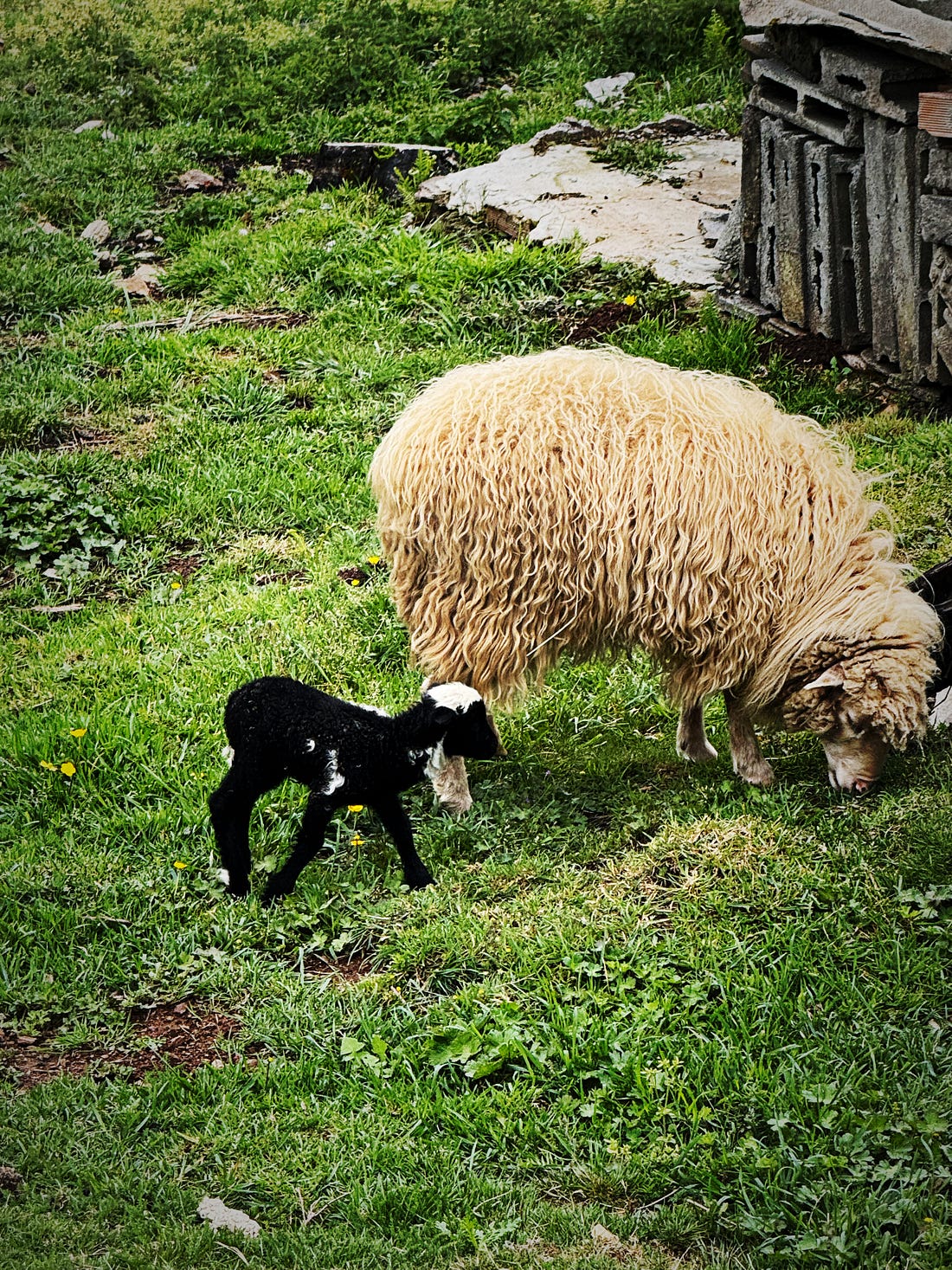
Yesterday, for example, my wife and I watched a ewe give birth. We stood beside the rock-wall fence, at a distance, amidst miles of farmland, and watched the little lamb emerge from the birth canal. It was messy. It was gross. It was bloody. And yet the lamb’s mother cleaned the infant’s little body with her own mouth, and so did another ewe who joined in. Maybe it was the lamb’s aunt Edna. I don’t know. Together the two female sheep bathed the baby, using only their tongues. The lamb struggled to stand on his own four feet, umbilical cord dangling, but he kept falling flat into the grass. So the two ewes surrounded him, and they made their bodies barriers to stabilize him. Their white wool was soon covered in blood and birthing fluids as the lamb leaned against them. Then, the mother used her muzzle to lift his messy body from the ground. And as little Shawn the Sheep stood onto his own wobbly legs, fighting against the unfriendliness of Earth’s gravity, it was hard not to cheer quietly as his mother introduced him to the newness of life. And yet, nothing about this process was sanitary or sterile. The ewes were a mess. Filthy with afterbirth and mud. Drooling and leaking. But despite their foulness, their exhaustion, and the bloodiness of motherhood, it was the most holy thing I ever saw.
I freely admit that I am not a smart man. I know so little. I am a dropout, the survivor of paternal suicide, and in many ways illiterate. The older I get, the less I understand. But I have learned something. I have learned that there is no part of you that is abhorrent to God. Not even your misconceptions of him. God is present in the most beautiful parts of your life, and equally intertwined within the most hideous. He is the interconnectedness of all, the pH in the soil, each solar flare, each supernova, and the blood in your beating heart. He is your mother. He is your father. Your brother, your sister. Infinitely bigger than your imagination; smaller than any insect could conceive. He is in all. He is above all. He is all. In fact, there is only one thing God is not: And that is subject to my definition. |